Overview
Different products require different buying checks.
A trading-card buyer cares about set and surface condition.
A camera buyer cares about exact model and optical condition.
A fashion buyer needs measurements.
A figure collector needs release identity, missing parts, and box condition.
Use the category guide that matches what you are buying.
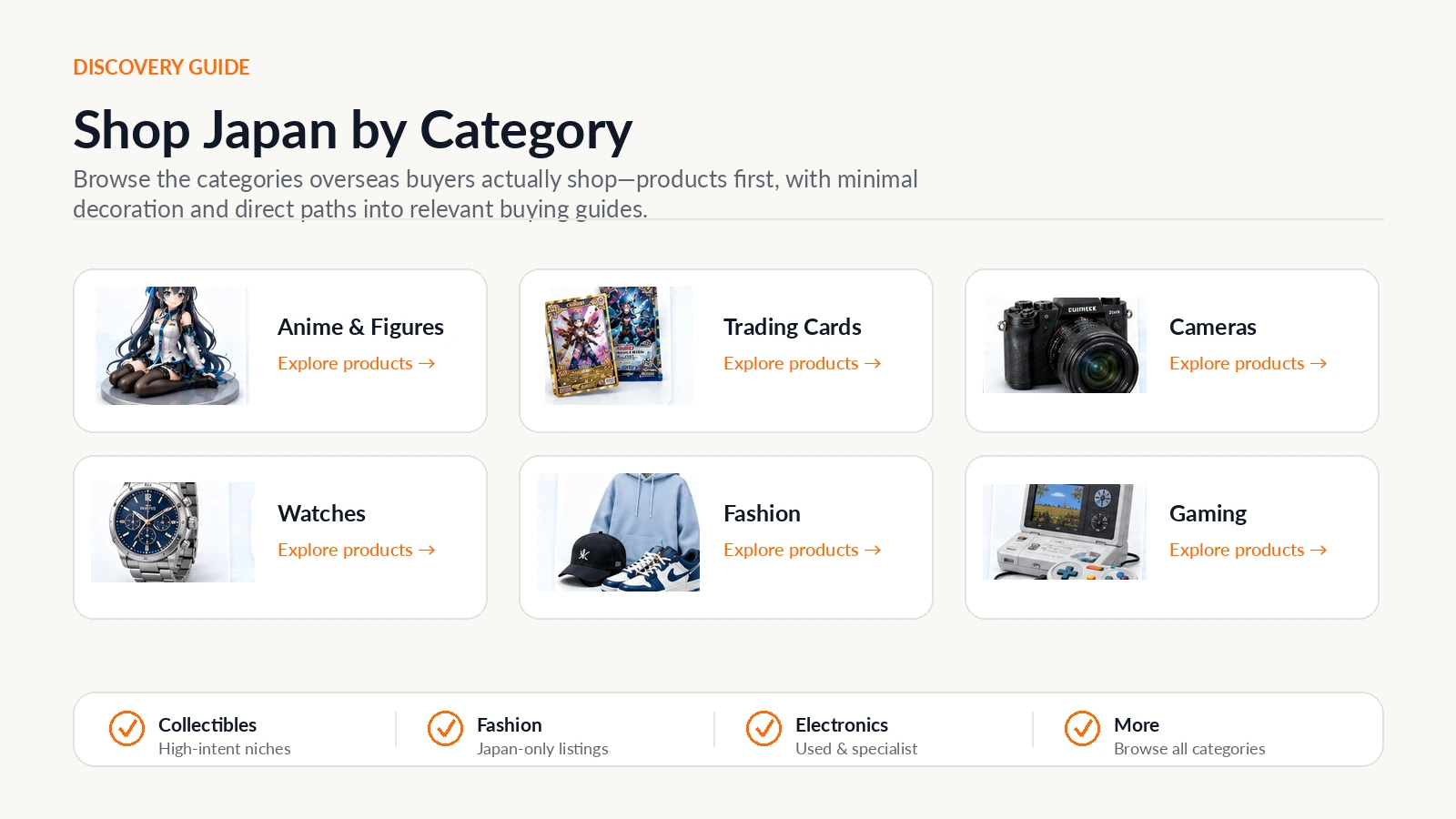
Anime Figures
Check:
- manufacturer
- scale
- original release vs. rerelease
- missing parts
- box condition
- bonus items
- parcel volume
Pokémon Cards
Check:
- set
- card number
- rarity
- print variation
- raw-card condition
- sealed status
Cameras & Digicams
Check:
- exact model
- mount
- fungus
- haze
- tested functions
- battery
- charger
- language/region limitations
Retro Games
Check:
- hardware revision
- region compatibility
- game language
- screen condition
- battery condition
- box/manual completeness
- included cables
Japanese Fashion
Check:
- actual measurements
- stains
- fading
- repairs
- product/style code
- authenticity evidence
Electronics
Check:
- voltage
- plug type
- wireless compatibility
- battery restrictions
- language settings
- warranty region
- tested functions
Collectibles
Check:
- exact release
- completeness
- packaging
- limited bonuses
- random/blind-box status
- collector condition
Fishing Gear
Check:
- exact model
- reel size
- gear ratio
- rod length
- section count
- corrosion
- oversized shipping
Fountain Pens & Stationery
Check:
- nib size
- edition
- converter/cartridge
- ink/liquid restrictions
- packaging
Vinyl Records
Check:
- catalog number
- pressing
- obi
- inserts
- jacket condition
- vinyl condition
- warping
Why category-specific buying matters
A generic “used condition” label is not enough.
For example:
Category knowledge reduces avoidable mistakes.
- a camera may be “used” but have fungus
- a figure may be “complete” but missing a bonus
- clothing may be marked L but fit much smaller than expected
- a record may have a clean jacket but damaged vinyl
JPS service basics
Across eligible categories:
- ¥300 proxy fee per purchase request
- 60 days free storage
- free consolidation
- packing from ¥500
- item photos ¥500/item
- actual carrier shipping rates
- no JPS shipping markup