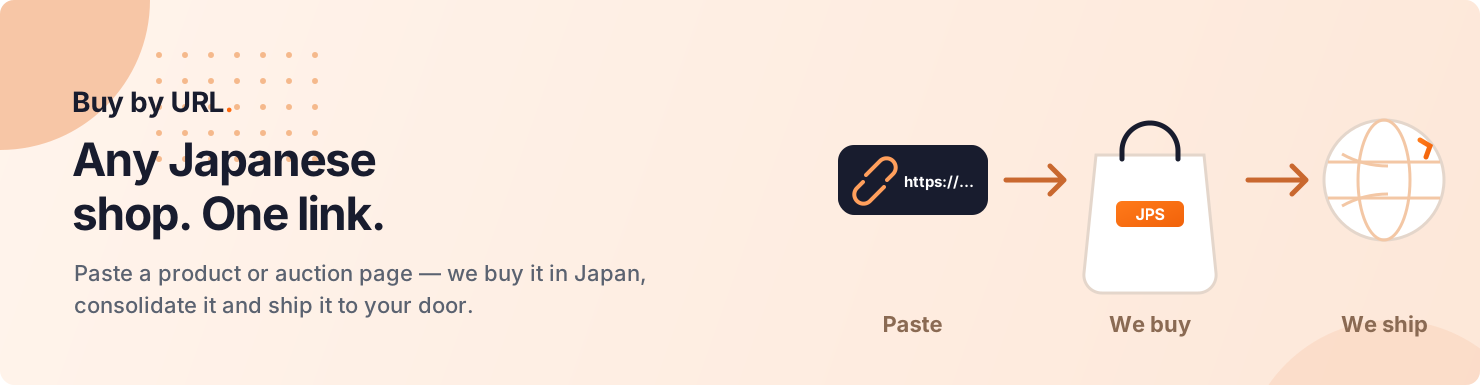
Buy by URL
Buy by URL from Japanese Stores
Not every Japanese store needs a dedicated marketplace integration. If you already found the exact Japanese product page you want, JPS may be able to handle the purchase through Buy by URL. This is designed for stores that are outside the standard JPS marketplace list.
Some Japanese stores cannot be handled because of: JPS should confirm eligibility before the customer relies on the purchase.
Shop anywhere
Popular stores to buy from by URL
This is designed for stores that are outside the standard JPS marketplace list.






JPS should confirm eligibility before the customer relies on the purchase.
The long tail
Buy by URL from Japanese Stores
Not every Japanese store needs a dedicated marketplace integration.
A URL alone is not always enough. Before submitting the request, confirm: If the page contains several options, specify the exact one. JPS should not guess.
store · product · variation · size · color · quantity · price · stock · condition if used · purchase limits · important store terms
Between request and purchase, a listing may change. Examples: If a material part of the order changes, the customer should be able to review it before purchase. A similar item is not an automatic substitute.
price increases · selected variation sells out · bonus disappears · quantity limit changes · preorder deadline changes
Some Japanese stores cannot be handled because of: JPS should confirm eligibility before the customer relies on the purchase.
membership restrictions · lotteries · identity verification · in-person pickup · purchase limits · anti-resale terms · unsupported payment requirements · restricted products
A product can be purchasable in Japan but difficult or impossible to ship internationally. Common examples include: Check before purchase when the category is sensitive.
lithium batteries · perfume · aerosols · alcohol · compressed gas · flammable liquids · some chemicals · oversized products
For an eligible Buy by URL request:
JPS purchase fee: ¥300 per purchase request · Japan domestic shipping: actual seller charge · free consolidation · 60 days free storage · international parcel packing: from ¥500 · international shipping: actual carrier rate · JPS shipping markup: ¥0
Useful order records include: That helps distinguish similar items at warehouse arrival.
source URL · store · product title · variation · quantity · purchase price · purchase date
JPS should confirm eligibility before the customer relies on the purchase.
How it works
Submit the exact product page
- 1
Submit the exact product page
A URL alone is not always enough. Before submitting the request, confirm: If the page contains several options, specify the exact one. JPS should not guess.
- 2
Material changes require a new decision
Between request and purchase, a listing may change. Examples: If a material part of the order changes, the customer should be able to review it before purchase. A similar item is not an automatic substitute.
- 3
Keep the source attached to the order
Useful order records include: That helps distinguish similar items at warehouse arrival.
What you can paste
Buy by URL does not mean every store is eligible
A URL alone is not always enough. Before submitting the request, confirm: If the page contains several options, specify the exact one. JPS should not guess.
store · product · variation · size · color · quantity · price · stock · condition if used · purchase limits · important store termsSome Japanese stores cannot be handled because of: JPS should confirm eligibility before the customer relies on the purchase.
membership restrictions · lotteries · identity verification · in-person pickup · purchase limits · anti-resale terms · unsupported payment requirements · restricted productsA product can be purchasable in Japan but difficult or impossible to ship internationally. Common examples include: Check before purchase when the category is sensitive.
lithium batteries · perfume · aerosols · alcohol · compressed gas · flammable liquids · some chemicals · oversized products- Between request and purchase, a listing may change. Examples: If a material part of the order changes, the customer should be able to review it before purchase. A similar item is not an automatic substitute.
- store, product, variation, size, color, quantity, price, stock, condition if used, purchase limits, important store terms
- A product can be purchasable in Japan but difficult or impossible to ship internationally. Common examples include: Check before purchase when the category is sensitive.
- Some Japanese stores cannot be handled because of: JPS should confirm eligibility before the customer relies on the purchase.
Buyer guides