Overview
JPS pricing is divided into two stages:
This keeps uncertain shipping costs out of the initial purchase total.
- purchase in Japan
- international shipping after warehouse packing
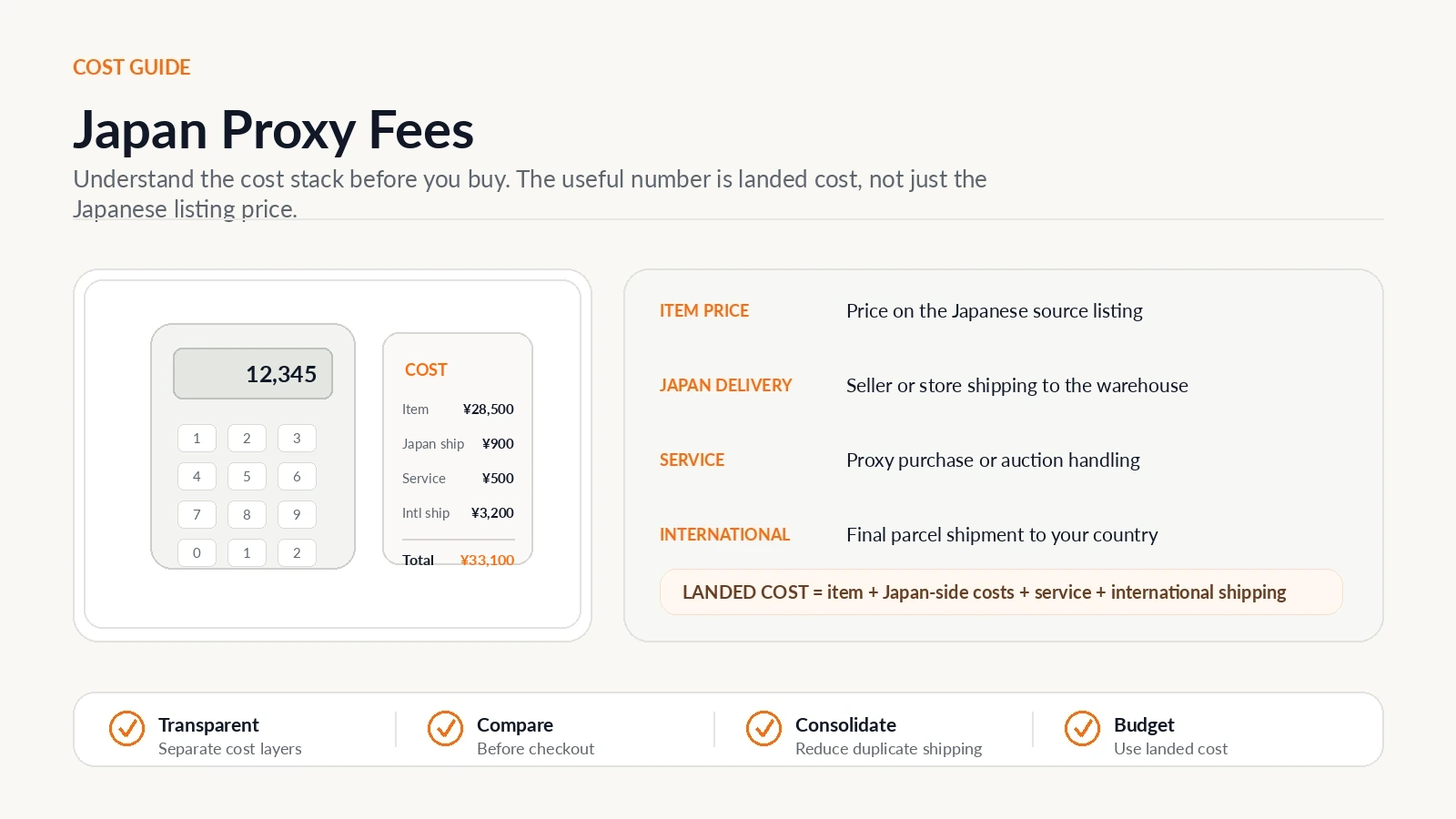
Payment 1 — Purchase in Japan
The purchase payment covers the item and the applicable Japan-side charges. Review the approved order amount before paying.
- item price
- actual Japan domestic shipping
- ¥300 JPS proxy fee per purchase request
Payment 2 — Warehouse & International Shipping
After warehouse arrival and parcel preparation, the customer pays applicable:
- packing
- optional warehouse services
- additional storage if used
- actual carrier international shipping
JPS fee table
- Proxy purchase: ¥300 per purchase request
- Japan domestic shipping: Actual seller charge
- Basic receiving check: Included
- Warehouse storage: 60 days free
- Consolidation: Free
- International parcel packing: From ¥500
- Item photos: ¥500/item
- Detailed inspection/authentication: Not included
- Parcel unpacking: ¥1,000
- Repacking/splitting: New packing fee applies
- International shipping: Actual carrier rate
- JPS shipping markup: ¥0
- Carrier claim assistance: Included
Additional storage
After the 60-day free period, storage charges apply according to size.
Current intended tiers:
- Small: from ¥350/week
- Medium: from ¥700/week
- Large: from ¥1,400/week
Consolidation vs. packing
These are separate.
Consolidation: Free
Packing: From ¥500 per final international parcel
If five eligible orders are combined into one parcel:
- consolidation fee: ¥0
- final parcel packing: from ¥500
Item photos
Warehouse photos:
¥500/item
Use them for visible confirmation.
They are not a professional authentication or technical inspection service.
International shipping
JPS charges:
Actual carrier rate — no JPS markup
The final carrier rate depends on actual weight, dimensions, destination, contents, and shipping method.
Carrier protection
Carrier shipping protection applies according to the selected carrier’s terms.
JPS assists with eligible carrier claims.
Compensation remains subject to carrier approval, limits, exclusions, and claim requirements.
Optional work only when needed
JPS avoids charging every customer for work they do not request.
Examples:
- photos: optional
- unpacking: charged only when requested/required
- repacking: charged when new packing work occurs
- additional storage: charged only after the free period
Example: estimate the total cost before you order
This illustration assumes one ¥7,000 item with seller-paid domestic delivery, one outbound parcel, no optional services and no excess storage. It is an example, not a shipping quotation, and excludes wallet-funding or payment-provider charges.
The purchase payment in this example is ¥7,300. International delivery is quoted separately after the parcel has been measured; destination customs duties and taxes, if applicable, are also separate.
If the seller charges domestic shipping, add the actual charge. Separate purchase requests normally incur separate fees; review any order-specific adjustments before payment. Consolidation combines eligible arrivals without a separate consolidation fee, but packing for the outbound parcel still applies.
- Example item price: ¥7,000
- Purchase request fee: ¥300
- Example Japan-side due: ¥7,300 (assuming ¥0 seller domestic shipping)
- Outbound packing: from ¥500
- International delivery: actual carrier rate once weighed and measured
- Possible additional costs: optional photos, extended storage, destination taxes
Which amount is known now, and which comes later?
The original item price, disclosed proxy fee and any known Japan-side delivery charge belong to the purchase decision. International shipping cannot be confirmed from the item price alone because the final box dimensions and packed weight are not yet known.
Wallet funding is a separate step from paying for an order. Review the wallet credit, any funding fee and total charge shown before confirming a top-up. Your card issuer or payment provider may apply its own currency-conversion charges.
- Known when the purchase request is reviewed: item cost, standard ¥300 JPS fee per request and any order-specific adjustment, applicable seller-side delivery costs
- Confirmed after warehouse packing: final parcel weight, dimensions, carrier choices and international transport cost
- Possible separate charges: paid storage after 60 days, optional warehouse services, recipient import taxes