How it worksFeesShippingHelp
JPSJapan ProxyShopping
mMercariYahoo! AuctionsRRakumaaAmazon JapanCategoriesGuidesBuy by URL
JPSJapan ProxyShopping

Discover items across Japan, purchase through one account, consolidate in Japan, and ship worldwide.

Japan proxy shopping

Proxy Shopping

  • Browse Japanese products
  • Shop by category
  • Buy-by-URL guide
  • Saved items
  • My account

Orders & Shipping

  • How it works
  • Buyer guides
  • Proxy fees
  • Consolidation
  • Japan warehouse
  • International shipping

Help & Company

  • Contact support
  • About JPS
  • Terms of Service
  • Privacy Policy
© 2026 Japan Proxy ShoppingJapan shopping · Consolidation · Worldwide deliveryEnglish · JPY
Home›Japanese Cameras

JAPAN BUYING GUIDE

Japanese Cameras

Japanese Cameras: find Japanese listings, compare marketplace sources, review condition details and use Japan proxy shopping for overseas delivery.

Browse RakutenBuy-by-URL guide
QUICK ANSWER

What to know about Japanese Cameras

For Japanese-market cameras and lenses, identify the exact version and condition first; compare price only after the listing evidence is strong enough to treat two items as substitutes. Treat the Japanese source page as the purchase evidence and keep downstream estimates labeled until the relevant seller, warehouse or carrier stage settles them.

Use Japanese camera listings to find condition detail, not just lower prices

Japan has deep used-camera inventory, but the value comes from model-specific condition evidence. Search with the exact body or lens model, then read the seller’s statements about fungus, haze, separation, shutter, meter, sensor or battery. Compare a clean but untested item differently from a heavily used item with documented functions.

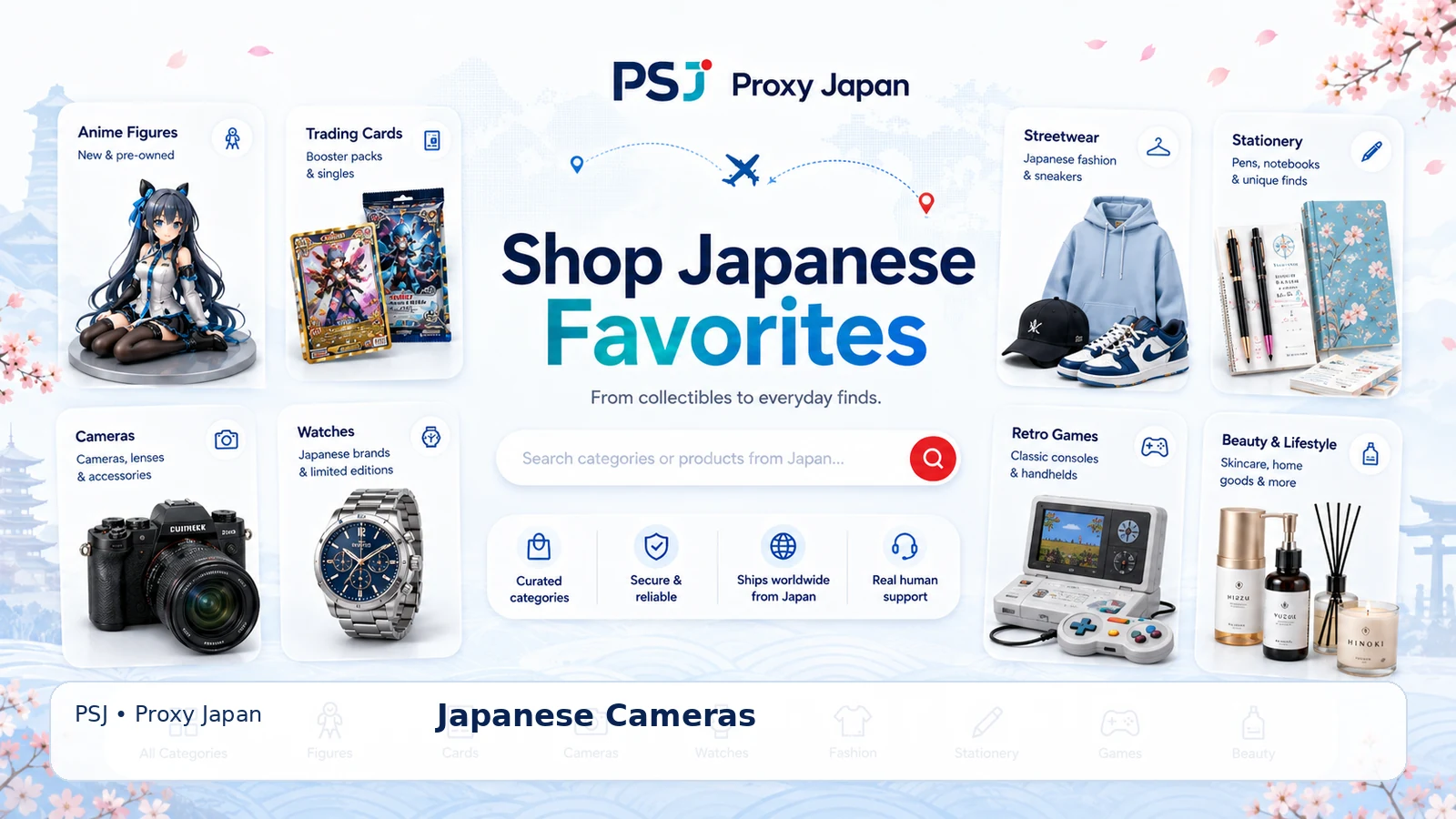
Reference artwork unavailableassets/editorial/psj/japanese-cameras.webp
JPS visual guide — Japanese Cameras.

Build a listing identity before comparing price

For Japanese-market cameras and lenses, the comparison should begin with brand, exact model, mount, lens version and included battery/charger. On Japanese Cameras, a lower price is meaningful only when the model, edition or variant matches the item you actually want.

Condition then needs its own pass: check tested functions, shutter behavior, meter/autofocus, fungus, haze, separation and corrosion. For Japanese Cameras, missing condition evidence should lower the ceiling; it should not be silently upgraded into a favorable grade.

Source-listing checklist

Use the Japanese Cameras checklist below before payment; each item is something that can materially change value, fit, completeness or risk.

A practical reason to walk away is a high-value camera described only as “beautiful” with no functional test detail. For Japanese Cameras, unresolved identity or condition can erase a small price advantage once the item reaches the warehouse.

  • Exact model and mount
  • Shutter/meter/flash test status
  • Lens fungus, haze and separation
  • Battery compartment corrosion
  • Sample images or sensor condition when relevant

Search Japan with identifiers first

A useful query pattern for this topic is: Nikon F3 動作確認済み; add the exact lens or body model before generic condition words. Build a Japanese Cameras query around the stable identifier first; use Japanese condition or transaction vocabulary as a deliberate second filter.

Open several results before tightening the query. For Japanese Cameras, overly specific keyword stacks can remove valid listings simply because one seller chose different shorthand.

動作確認済み完動品ジャンクカビ曇りバルサム切れ

Where to compare listings

For Japanese Cameras, a second marketplace is useful as a comparable set even when you intend to purchase from the first one. For Japanese Cameras, marketplace breadth is valuable because it reveals whether a low price reflects the market or a weaker item.

Large used-market supply.

Auction lots and repair inventory.

Additional peer-to-peer listings.

Warehouse and US shipping decision

Body and lens immobilized separately, caps fitted when available, batteries handled under current carrier rules.

Cameras are dense and fragile. Keep bodies and lenses immobilized with padding, protect protruding controls, and consider separating very heavy accessories from delicate bodies.

Japanese listings use “ジャンク” broadly. It can mean untested, faulty or for-parts; do not translate it as a specific defect without reading the seller’s description.

A useful maximum-price rule

Set the maximum around a verified example of Japanese-market cameras and lenses, not around the cheapest search result. Derive the Japanese Cameras maximum from delivered value rather than source price; subtract every downstream cost layer and leave a risk buffer for any material unknown. For Japanese Cameras, this is the difference between comparing source prices and controlling the delivered cost you will actually pay.

Plan your order

How to buy from JapanUnderstand fee layersConsolidation guideShipping methods
Ready to shop?

Search the live Rakuten catalog while keeping the original Japanese product details visible.

Browse products

Keep exploring

Related buying guides

How to buy from Japan →Understand fee layers →Consolidation guide →US customs basics →Open Buy by URL →Film Cameras from JapanJapanese DigicamsBest Japan Proxy for Used Cameras: Buyer CriteriaHow to Buy from Japan