Overview
There is no single proxy setup that is automatically best for every buyer.
A collector building a two-month haul needs different things from a buyer ordering one inexpensive item.
The useful question is:
Does the service make the complete purchase predictable from Japan-side checkout through international delivery?
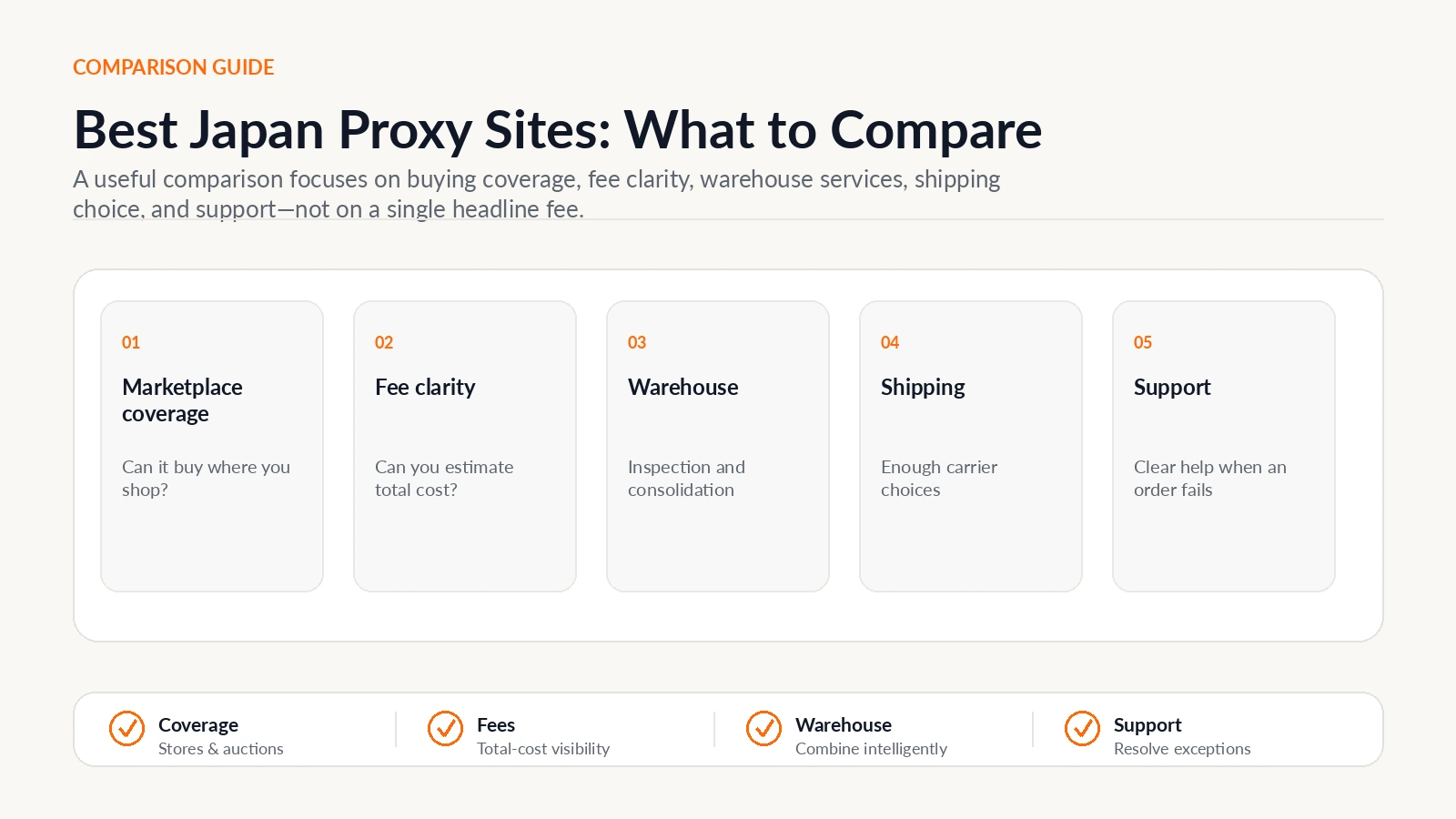
1. Start with marketplace access
Check whether the service can handle the Japanese sources you actually use.
That may include:
Do not judge a proxy by the number of marketplace logos on the homepage.
Judge it by whether it can execute your actual purchases accurately.
- marketplaces
- auctions
- flea-market listings
- specialty stores
- direct product URLs
2. Understand the purchase fee
JPS charges:
¥300 per purchase request
Japan domestic shipping is charged at the seller's actual amount.
The purchase stage is separated from international shipping so the customer can see what is due now and what is determined later.
3. Look at warehouse time
JPS provides:
60 days free warehouse storage
This matters when:
- purchases arrive from multiple sellers
- preorder release dates differ
- you are building a multi-store haul
4. Understand consolidation and packing separately
JPS consolidation:
Free
International parcel packing:
From ¥500 per final parcel
This avoids charging a separate consolidation fee while still covering the real labor and materials required to prepare the outbound shipment.
5. Check what basic receiving includes
JPS basic receiving check is included.
Detailed inspection, testing, or authentication is not included in the standard service.
Item photos are available for:
¥500/item
This keeps the standard fee simple while allowing buyers to add visual confirmation when needed.
6. Compare international shipping honestly
JPS international shipping is:
Actual carrier rate — no JPS markup
The final cost depends on:
This is why shipping is paid after the parcel is prepared.
- actual weight
- parcel dimensions
- destination
- carrier
- contents
7. Check claim support
Carrier shipping protection applies according to the selected carrier's terms.
JPS assists with eligible carrier claims.
This should be clearly distinguished from seller disputes, authenticity problems, or condition issues that existed before international shipment.
8. Watch for unnecessary fees
A transparent proxy should make it clear when charges apply.
With JPS:
The customer can see which fees are standard and which are triggered only by optional work.
- consolidation: free
- storage: free for 60 days
- basic receiving: included
- packing: from ¥500
- photos: optional
- unpacking: ¥1,000
- repacking/splitting: new packing fee applies