Overview
Package consolidation means combining eligible purchases that arrived separately at the JPS warehouse into one outbound international parcel.
At JPS:
Consolidation is free.
Customers pay for the final international parcel packing, which starts from:
¥500 per parcel
These are separate concepts.
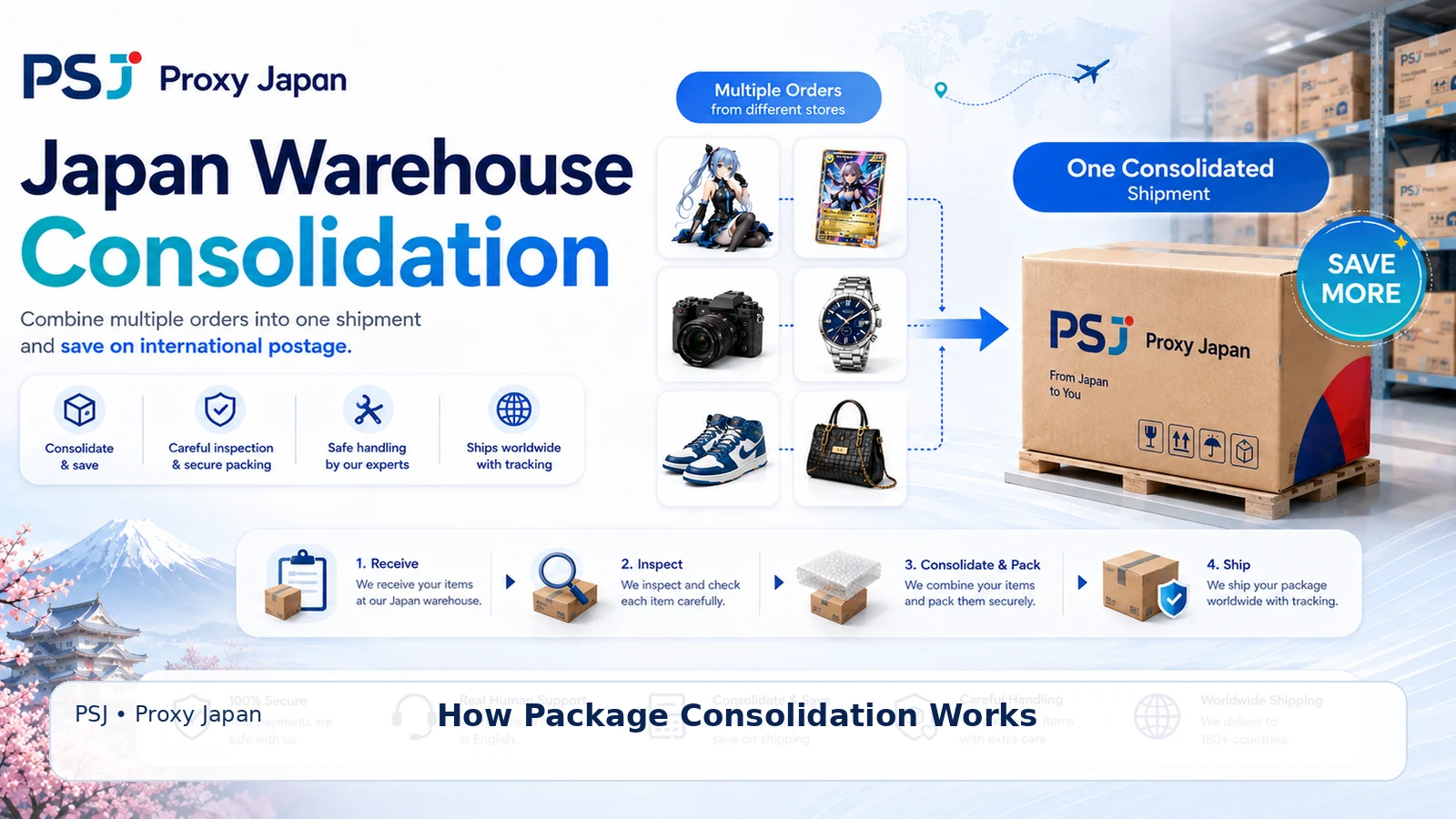
Why buyers consolidate
Without consolidation, several seller orders could require several international shipments.
Combining compatible purchases can reduce:
This works especially well for small, lightweight products.
- duplicated international base charges
- repeated packaging
- number of outbound parcels
- number of tracking numbers
Consolidation begins after warehouse arrival
JPS needs the actual items before the final packing decision can be made.
Before arrival, JPS may not know:
That is why international shipping is finalized after packing.
- seller carton size
- actual item weight
- amount of padding
- fragility
- battery configuration
- final dimensions
Good consolidation is about compatibility
Items that usually combine efficiently include:
Items that need more care include:
The fact that two products fit in one box does not mean they should be packed together without protection.
- trading cards
- acrylic goods
- games
- CDs
- small fashion items
- compact accessories
- scale figures
- records
- heavy books
- cameras and lenses
- fragile ceramics
- large model kits
- long fishing rods
Dimensional weight can erase the savings
Some international carriers charge based on actual weight or dimensional weight.
A parcel can therefore be light but expensive when it is large.
Common examples:
Combining several large retail boxes can create a carton that costs more than expected.
- anime figures
- Gunpla
- plush toys
- shoes
- collector boxes
When splitting can be better
Two parcels may be better than one when:
- one item is oversized
- one item has shipping restrictions
- heavy and fragile goods should be separated
- the combined carton becomes too large
- carrier size limits are exceeded
- a high-value item should ship separately
Original packaging: keep or remove?
Removing a seller’s outer shipping carton can reduce volume.
Removing product packaging is a different decision.
Collectors may want to preserve:
JPS should distinguish unnecessary seller packaging from packaging that is part of the product’s value.
- figure boxes
- watch tins
- game boxes
- limited-edition packaging
- sealed product wrap
JPS storage gives time to build a shipment
JPS provides:
60 days free warehouse storage
This allows buyers to wait for multiple orders before deciding how to consolidate them.
What customers should know before shipping
Before paying international freight, the customer should be able to review:
- which orders are in the parcel
- actual weight
- dimensions
- available carrier options
- any special packing request
- whether unpacking/repacking is needed
Repacking or splitting after preparation
If an already prepared parcel must be reopened:
Parcel unpacking: ¥1,000
If the items are then repacked or split, new packing fees apply.
International shipping
JPS charges:
Actual carrier rate — no JPS markup
Carrier shipping protection applies according to the selected carrier’s terms.