Overview
A useful Japan proxy website should answer practical questions before the customer has to contact support.
The best sites make the transaction easy to understand from:
Japanese listing → purchase → warehouse → parcel → international shipping
The interface matters because proxy shopping has more stages than a normal e-commerce checkout.
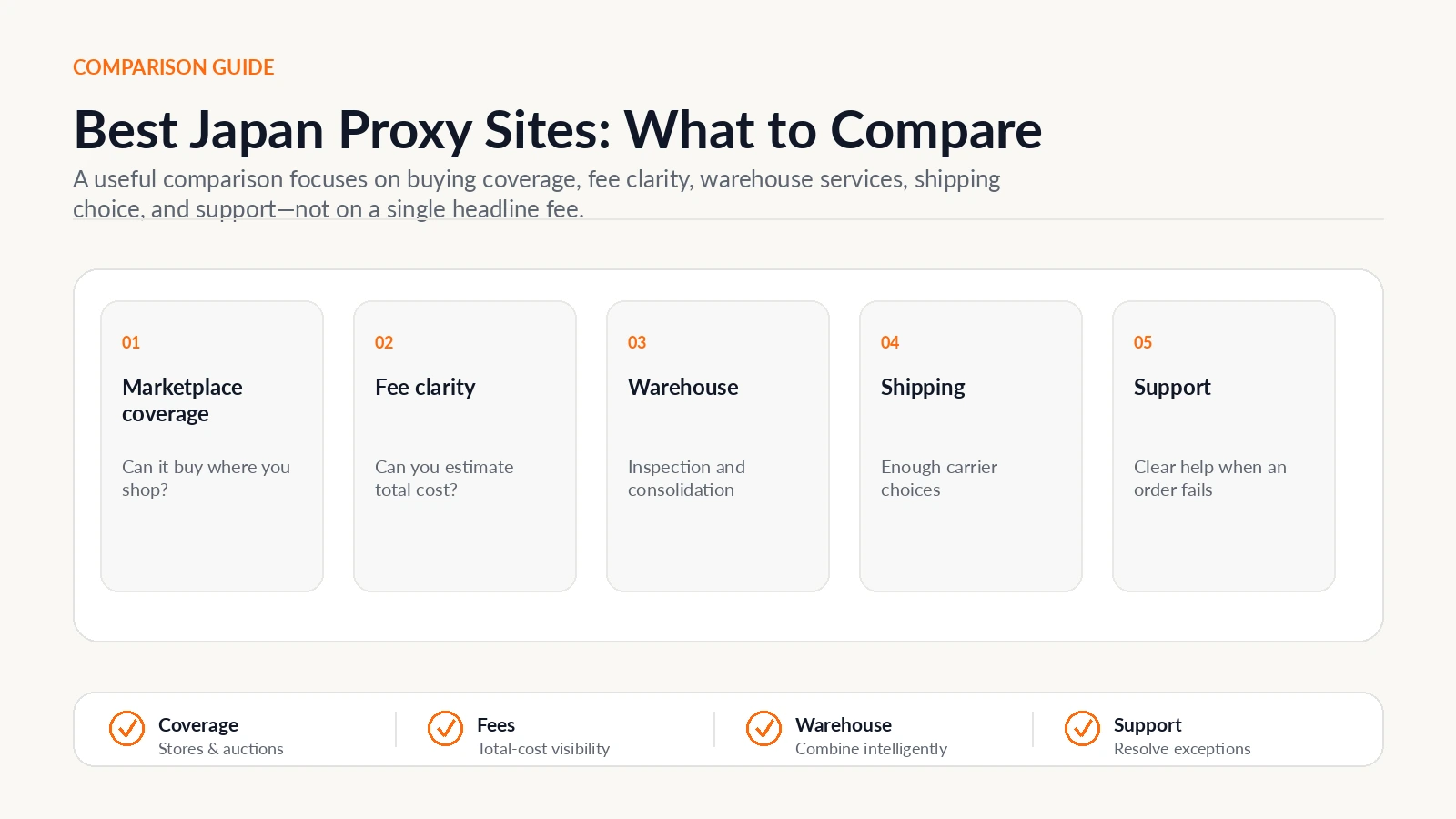
1. The purchase cost should be visible before payment
A customer should be able to see:
JPS uses a two-stage payment structure.
At purchase:
Item price + Japan domestic shipping + ¥300 JPS fee
International shipping is handled later after packing.
- item price
- Japan domestic shipping
- proxy fee
- amount due now
2. The website should distinguish estimates from final charges
Before warehouse arrival, international shipping is only an estimate.
After packing, the customer should be able to see:
This avoids presenting a pre-purchase shipping estimate as a guaranteed charge.
- actual weight
- parcel dimensions
- available shipping methods
- final carrier rate
3. Storage should be easy to understand
JPS provides:
60 days free storage
The customer should always know:
- warehouse arrival date
- free-storage deadline
- additional storage charges after that point
4. Consolidation and packing should not be confused
JPS:
The site should not make customers wonder whether they are paying twice for the same warehouse work.
- consolidation: free
- international parcel packing: from ¥500
5. Optional services should be clearly optional
Examples:
These charges should appear only when the customer chooses or triggers the service.
- item photos: ¥500/item
- parcel unpacking: ¥1,000
- repacking/splitting: new packing fee applies
6. Shipping should show the real carrier rate
JPS does not add markup to international shipping.
The customer pays the actual applicable carrier rate.
The site should also show that carrier shipping protection is subject to the selected carrier's terms.
7. Order status should explain what is happening
Useful statuses include:
A vague “processing” label is not enough for a multi-stage transaction.
- purchase requested
- purchased
- seller preparing shipment
- shipped within Japan
- arrived at warehouse
- stored
- consolidation requested
- packing
- ready for international shipping
- shipped internationally
8. Help content should match the stage of the order
A good proxy site should link customers directly to the relevant guidance:
This reduces support tickets and helps buyers make better decisions.
- before purchase
- auction bidding
- used condition
- storage
- consolidation
- shipping
- customs
- claims