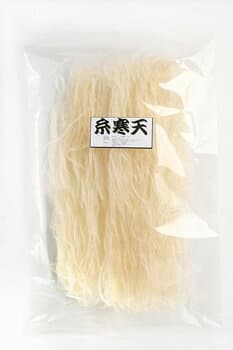
糸寒天 (100g) 岐阜県産
Thread agar (100g) from Gifu Prefecture
Price
Quantity
Description
■名 称:寒天 ■賞味期限:360日 ■保存方法:高温多湿、直射日光を避けて保管してください。 ■内容量:100g ■原産地:岐阜県寒天とは 寒天は、天草やオゴノリなどの海藻を加工して作られた食品です。これらの海藻には寒天質が含まれており、冷凍および解凍させることで寒天ができあがります。きっかけになったのはところてんと言われています。ところてんは海藻類の寒天質を冷やし固めたもの。ところてんを外に放置していたところ、寒さで凍った後に日中の日差しで自然乾燥が進み寒天が生まれました。つまり、ところてんと寒天は製法が違うだけで原料は同じということです。 寒天の品種・種類 寒天は原材料による大きな違いはありませんが、加工によって種類が異なります。 ・粉寒天 粉寒天は、天日干しした寒天を、さらにアルカリ処理で粉状にしたもの。全国各地の工場で作られている寒天です。糸寒天や角寒天と違い、水に浸し柔らかくする工程が必要ありません。計量が簡単で、水にも溶けやすいので調理の時短にも役立ちます。 ・糸寒天 糸寒天は糸状に乾燥させた寒天です。岐阜県で主に作られています。糸状のままサラダやスープとして活用したり、火にかけ煮溶かしたりなど活用方法はさまざまです。水に浸け、柔らかくしてから使用します。 ・棒寒天(角寒天) 角寒天は、寒天を天日干しして、棒状にした加工品です。必要量をちぎって、水で柔らかく戻した後に使用します。寒天の中でも食物繊維量が特に豊富なタイプですが、一方でわずかにカロリーが高めです。 寒天に含まれる成分・栄養素 カロリーが低く食物繊維が豊富なため、しばしばダイエット食品として活躍する寒天。しかし、実は寒天の主成分は炭水化物です。低カロリーの秘密は、炭水化物のなかでも食物繊維がほとんどを占めているため。保水力の高い食物繊維は、胃で膨らみ満腹感も与えてくれます。まさにダイエットの補助食品として心強い味方と言えるでしょう。寒天に含まれる栄養素の多くは、食物繊維ですが、カルシウムやマグネシウムなどのミネラル類も含有しています。 寒天の効果・効能 寒天に多く含まれる食物繊維は、消化・吸収されずに大腸まで届く栄養素です。この不溶性食物繊維は、保水機能に優れ、摂取すれば便の体積を増やし、腸のぜん動運動を促進します。ある研究では、被験者に一定期間ゼラチンで作ったゼリーと寒天で作ったゼリーを与えて経過を観察したところ、寒天摂取期間に排便の頻度と量が増加したという結果が出ています。一方、水溶性食物繊維には糖の吸収を阻害する作用が期待され、血糖値の急激な上昇を抑える効果があります。 寒天に含まれるミネラル類の中でも特に豊富に含まれるのは、カルシウムとマグネシウムです。水溶性食物繊維のデキストリンは、大腸でミネラルの吸収を促進するという研究が発表されました。さらに、デキストリンを摂取すると便の体積が増え、腸内細菌の代謝物である短鎖脂肪酸量が増加。腸内phを低下させ、ミネラルの吸収率があがると考えられています。 寒天の食べ方 ・寒天の洗い方 糸寒天・角寒天の場合は、使用前によく洗ってからたっぷりの水につけましょう。お好みに合わせて10~30分ほど浸したら、下処理は完了です。粉寒天の場合は下処理いらずでそのまま料理に使えます。 溶かす場合は、必ず沸騰したところに寒天を混ぜましょう。寒天は常温でも固まるので、温度が低いとダマになってしまう可能性があります。 ・寒天の調理方法 寒天を調理するには、種類ごとの凝固力に注意しましょう。一般的には粉寒天4g程度が、角寒天の1本分(8g)に相当します。糸寒天の場合は24~28本でだいたい角寒天1本と同等です。 例えば、溶かしたものを冷やし固めれば寒天ゼリーができます。炊飯器にお米と一緒に入れて炊くのもおすすめです。お米に甘みとツヤが出て、おいしく炊き上げられます。煮溶かす場合は、粉寒天がもっとも使いやすいです。細かくちぎれば角寒天や糸寒天も同様に使えます。 糸寒天やちぎった角寒天は、サラダの具材として活用できます。糸寒天ならお味噌汁やスープの具にしても良さそうです。ただし、熱が加わり続けると溶け切ってしまうので、食感を活かして調理したい際は注意してください。 寒天の注意点 食物繊維が豊富な寒天ですが、他の栄養素はそれほど多く含まれていません。そのため、タンパク質や脂質、ビタミン類などが含まれた食材と合わせるようにしましょう。カロリーが低いからと言って、寒天ばかり摂取していると他の栄養素が不足し、かえって不健康になってしまう可能性もあるので注意してください。また、寒天は食物繊維を多く含む分、食べ過ぎると人によっては下痢や腹痛を引き起こしてしまうので注意しましょう。摂取目安量は、成人男性で1日21g、成人女性で1日18g以上です。食物繊維は他の食材にも含まれる栄養素ですから、バランスをよく考えて摂取するようにしましょう。
■Name: Agar ■Best-by date: 360 days ■Storage: Avoid high temperatures, humidity, and direct sunlight. ■Contents: 100g ■Origin: Gifu Prefecture What is agar? Agar is a food made from processed seaweed, such as Amakusa and Gracilaria. These seaweeds contain agar, which is created by freezing and thawing. It is said to have originated from tokoroten, a type of agar. Tokoroten is made by cooling and solidifying the agar from seaweed. When tokoroten was left outside, it froze in the cold and then dried naturally in the daytime sun, creating agar. In other words, tokoroten and agar share the same ingredients, just different manufacturing methods. Agar varieties and types While there are no significant differences in agar based on the ingredients, the types vary depending on how it is processed. ・Powdered agar Powdered agar is made by sun-dried agar and then further treating it with alkali to create a powder. This type of agar is produced in factories across the country. Unlike thread agar and square agar, this product does not require soaking in water to soften. It's easy to measure and dissolves quickly in water, helping to save time during cooking. Thread agar: Thread agar is agar dried into threads. It's primarily produced in Gifu Prefecture. It can be used in a variety of ways, including in salads or soups, or by boiling it. It's soaked in water to soften before use. Stick agar (square agar): Square agar is a processed product made by sun-drying agar and then forming it into a stick. Simply tear off the required amount and rehydrate it in water before use. This type of agar is particularly rich in dietary fiber, but it also has a slightly higher calorie content. Ingredients and nutrients found in agar: Agar is often used as a diet food because it's low in calories and rich in dietary fiber. However, its main component is actually carbohydrates. The secret to its low calorie content is that dietary fiber accounts for the majority of its carbohydrate content. Dietary fiber, with its high water-retaining capacity, expands in the stomach, giving you a feeling of fullness. It is truly a powerful dietary supplement. While most of the nutrients contained in agar are dietary fiber, it also contains minerals such as calcium and magnesium. Agar's Benefits: The dietary fiber contained in agar is a nutrient that reaches the large intestine without being digested or absorbed. This insoluble dietary fiber has excellent water-retaining properties, and when ingested, it increases stool volume and promotes intestinal peristalsis. In one study, subjects were given gelatin jelly and agar jelly for a certain period of time and observed the progress. The results showed that the frequency and volume of bowel movements increased during the agar intake period. On the other hand, soluble dietary fiber is expected to inhibit sugar absorption and help prevent sudden increases in blood sugar levels. Among the minerals contained in agar, calcium and magnesium are particularly abundant. Research has shown that the soluble dietary fiber dextrin promotes mineral absorption in the large intestine. Furthermore, dextrin intake increases stool volume and increases the amount of short-chain fatty acids, a metabolite of intestinal bacteria. It is believed to lower intestinal pH and increase mineral absorption. How to Eat Agar: Washing Agar: For thread agar and cube agar, wash thoroughly before use and soak in plenty of water. Soak for 10 to 30 minutes, depending on your preference, and the pre-treatment is complete. Powdered agar can be used directly in cooking without pre-treatment. When dissolving, be sure to add the agar to boiling water. Agar solidifies even at room temperature, so lower temperatures may result in clumping. How to Cook Agar: When cooking agar, pay attention to the coagulation strength of each type. Generally, about 4g of powdered agar is equivalent to one cube agar (8g). For thread agar, 24 to 28 cubes are roughly equivalent to one cube agar. For example, you can make agar jelly by cooling and solidifying the melted agar. It is also recommended to cook it with rice in a rice cooker. This adds sweetness and luster to the rice, resulting in a delicious result. Powdered agar is the easiest to use when boiling and dissolving. Kakukan and thread agar can be torn into small pieces and used in the same way. Thread agar and torn cubes can be used as salad ingredients. Thread agar also seems to be good as an ingredient in miso soup or other soups. However, if heated continuously, it will dissolve completely, so be careful if you want to take advantage of its texture. A word of caution about agar: While agar is rich in dietary fiber, it does not contain much other nutrients. Therefore, it is best to combine it with foods containing protein, lipids, and vitamins. Even though it is low in calories, consuming only agar can lead to nutrient deficiencies and may actually be unhealthy. Also, because agar contains a lot of dietary fiber, eating too much can cause diarrhea and stomach pain in some people, so be careful. The recommended daily intake is 21g for adult men and 18g or more for adult women. Dietary fiber is also found in other foods, so be sure to consider a balanced diet.